How to safely save text messages in a domestic violence situation
Safety comes before evidence: do not do anything that could alert the person, and if it is safe, make a copy of the abusive texts on a device and in a place the abuser cannot reach, then talk to an advocate before you decide who to show. If you are in danger, call 911. In the U.S. the National Domestic Violence Hotline is 1-800-799-7233 (or chat at thehotline.org), and a trained advocate can help you plan.
Think about who can see what
- The abuser may know your phone passcode, your Apple ID password or your email.
- They may share your iCloud, your Mac or a family plan.
- Deleted messages, new files or a changed setting can be noticed.
- A backup folder on a shared computer is easy to find.
Safer ways to keep copies
- Use a computer or phone the abuser has never used and cannot get into, such as a friend’s, a library’s or a work computer if your workplace allows it.
- Keep the exports on a USB drive stored at a trusted person’s home, or in an account with a password only you know and two-factor sign-in set to a number only you hold.
- Do not email the files to an address the abuser can read.
- Do not leave exports in the Downloads folder of a shared Mac.
Do not change anything the abuser might notice
Leave the original messages on the phone unless an advocate tells you otherwise. Deleting threads, turning off Messages in iCloud or blocking the number suddenly may cause a reaction. An advocate can help you decide when and how to change things.
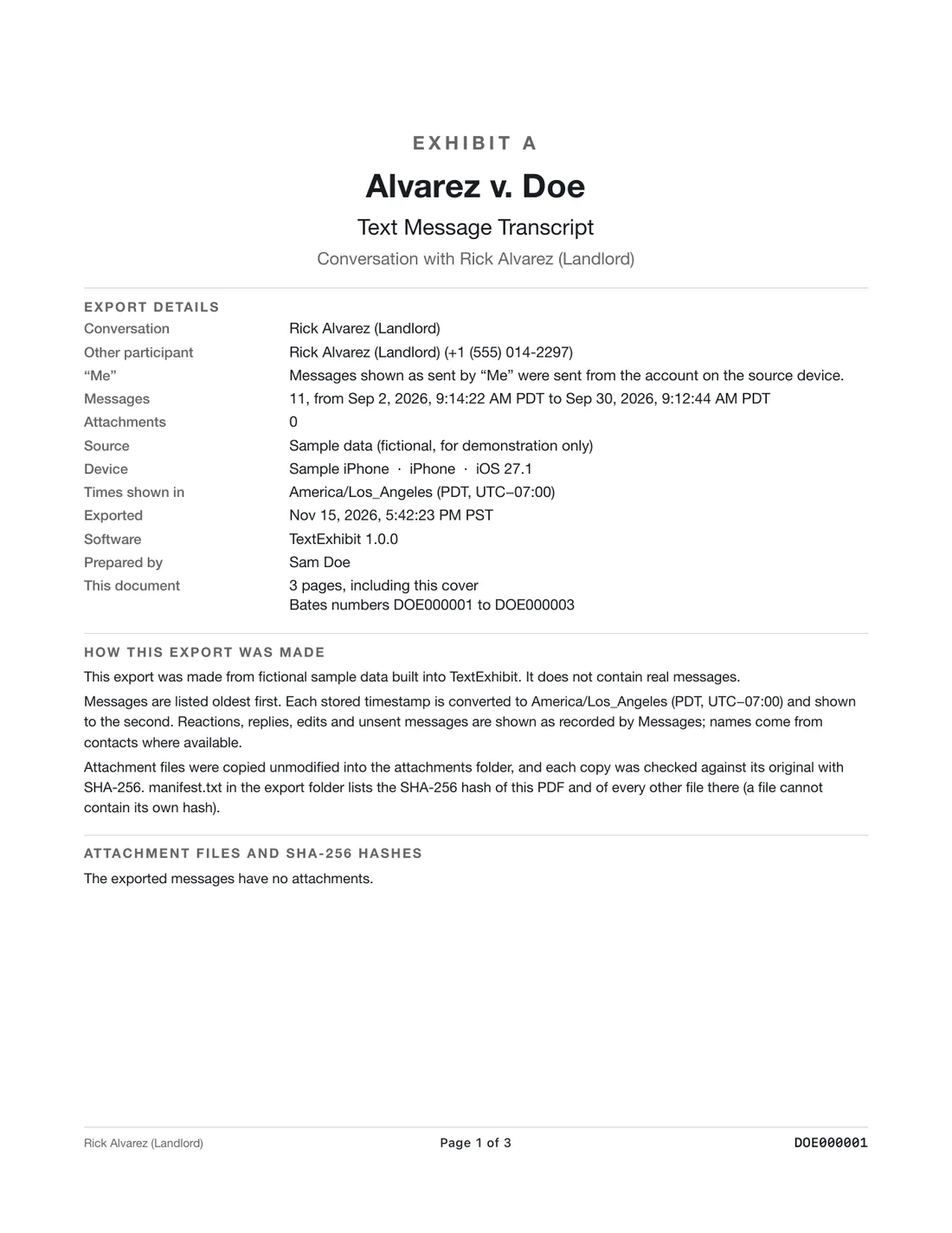
Taking a copy with TextExhibit
- Use a Mac you control. TextExhibit runs only on a Mac and nothing is uploaded or installed on the iPhone.
- Source choices: the iPhone over a cable, which makes a fresh backup on that Mac, or an existing backup. Both leave files on that Mac, so delete them afterward if it is not a safe computer and you have moved copies elsewhere.
- Pick the conversation, export to PDF and save the folder straight to the USB drive.
- Check that the exports are no longer on the computer, empty the Trash and remove the backup if you created one for this.
- Keep the drive somewhere safe.
Quick alternative
If you cannot use a Mac, a few screenshots sent to a friend’s phone, with the date and time showing, are better than nothing. Do not send them to your own email if the abuser can read it. For the other steps, see someone checks your phone and copies off a shared phone.
What to keep in mind
- General information, not safety planning. An advocate can tailor a plan to your situation. If you are in danger, call 911. In the U.S. the National Domestic Violence Hotline is 1-800-799-7233 (or chat at thehotline.org), and a trained advocate can help you plan.
- Devices can be monitored by software you cannot see. The Safety Net project listed under Sources explains the signs.
- Evidence is secondary. You do not need a perfect record to get help.
Questions
Should I delete the messages after I copy them?
Not without advice. Deleting can alert the abuser and can remove the original.
Can the abuser see that I made a backup?
On a shared Mac or iCloud they might. Use a device they cannot access.
Do I need evidence to call the hotline?
No. You can call any time, whether or not you have a record.
What if the abuser reads my texts?
Think about using a different device for sensitive conversations and speak with an advocate.
Sources
- National Domestic Violence Hotline (checked November 15, 2026)
- NNEDV Safety Net: technology safety and privacy (checked November 15, 2026)
Export the whole conversation
TextExhibit turns a conversation into one PDF with exact times, names and numbers, photos in place and page numbers, on your Mac. Free to preview; $24.99 once to export.