Which texts help at a spousal visa consular interview?
Bring a small, dated set of recent messages only if the consulate's instructions allow extra documents, and know what your messages say, because the interview is mainly questions. Read the consulate's instruction page first, then prepare a short printed set and keep your phone with the originals.
What to look for
- Recent messages that show daily contact and plans.
- Messages about the wedding, visits and meeting families.
- Messages that match what you wrote in the petition and forms.
- Messages that show how you handle money and household matters together.
- Photos and messages around trips you may be asked about.
- Anything you already submitted, so the stories match.
How to organize them
- Check the consulate's website for its document rules.
- Choose a few pages from recent months and a few from earlier.
- Print them with the date and sender visible, and bring the phone.
- Review the messages with your spouse so details line up.
Getting the texts out
Do not memorize a script. Officers often ask each spouse separate questions about ordinary life, and honest answers that match your records matter more than a thick folder.
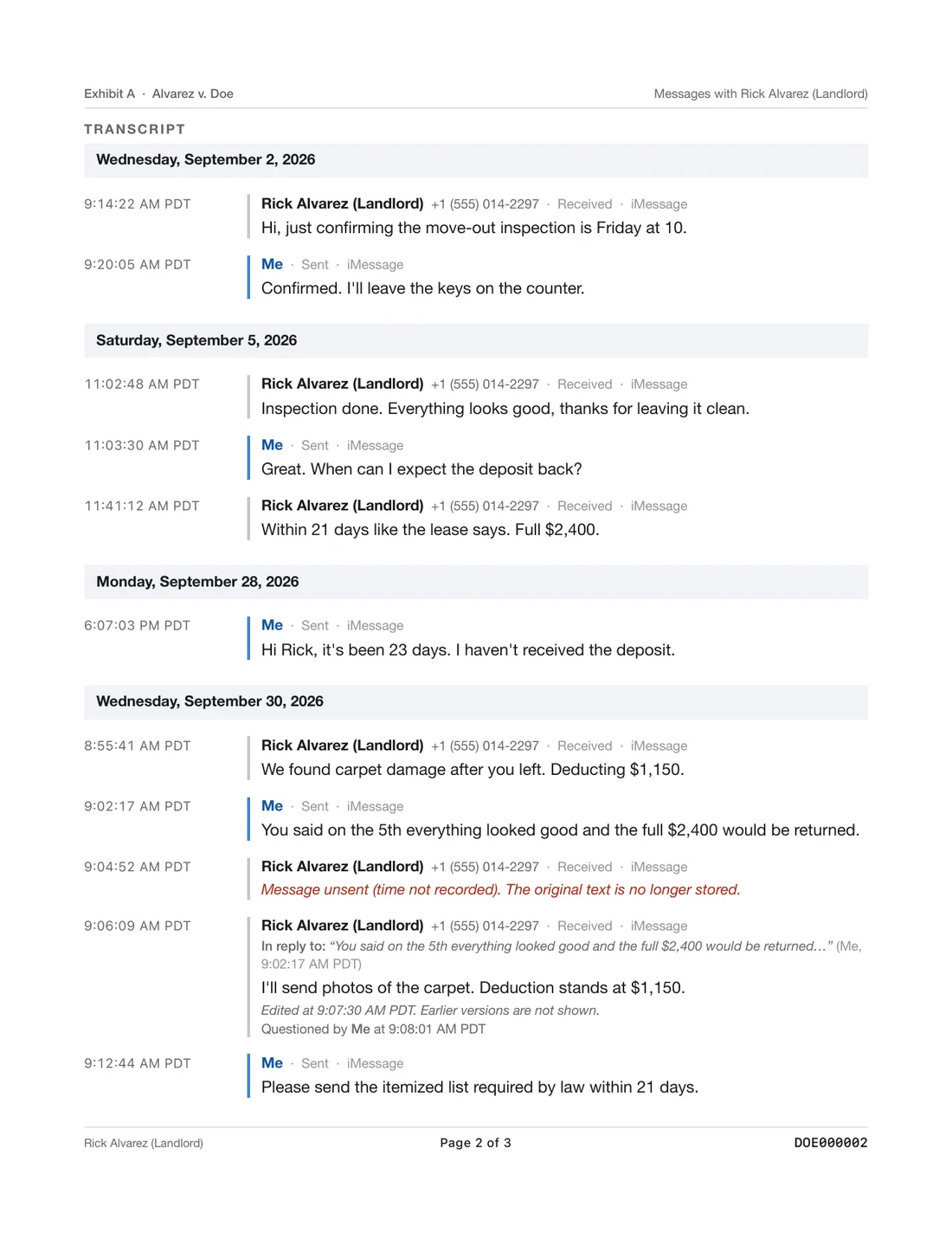
To get a clean copy, export the conversation instead of cropping screenshots: TextExhibit on a Mac produces a PDF with every message, its date and time, and the sender's name and number, plus a CSV if someone wants to sort it. The free version is watermarked, and $24.99 unlocks clean exports. If you also need to show the copy is real, read how to authenticate text messages.
What the other side may argue
An officer may ask about a message that does not fit your story or about gaps in contact. Having the full export at home lets you check dates, and answering plainly is better than guessing.
Who gets what
- The consulate officer, only if asked or allowed.
- Your lawyer, if you have one: the full set.
- Backups at home.
What to keep in mind
- Consulates set their own rules for documents.
- Texts do not replace the official forms and evidence.
- General information, not legal advice. Rules differ by state, agency and court; ask a lawyer or the agency itself what it needs.
Questions
Should I bring my phone?
It is wise to have it, but follow the consulate's rules on electronics.
Do I need translations?
Yes for messages not in English.
Is a printed set required?
Not always. Check the instructions.
Sources
- USCIS: Form I-130 (checked November 15, 2026)
Export the whole conversation
TextExhibit turns a conversation into one PDF with exact times, names and numbers, photos in place and page numbers, on your Mac. Free to preview; $24.99 once to export.