Can text messages be used in an Arizona divorce or custody case?
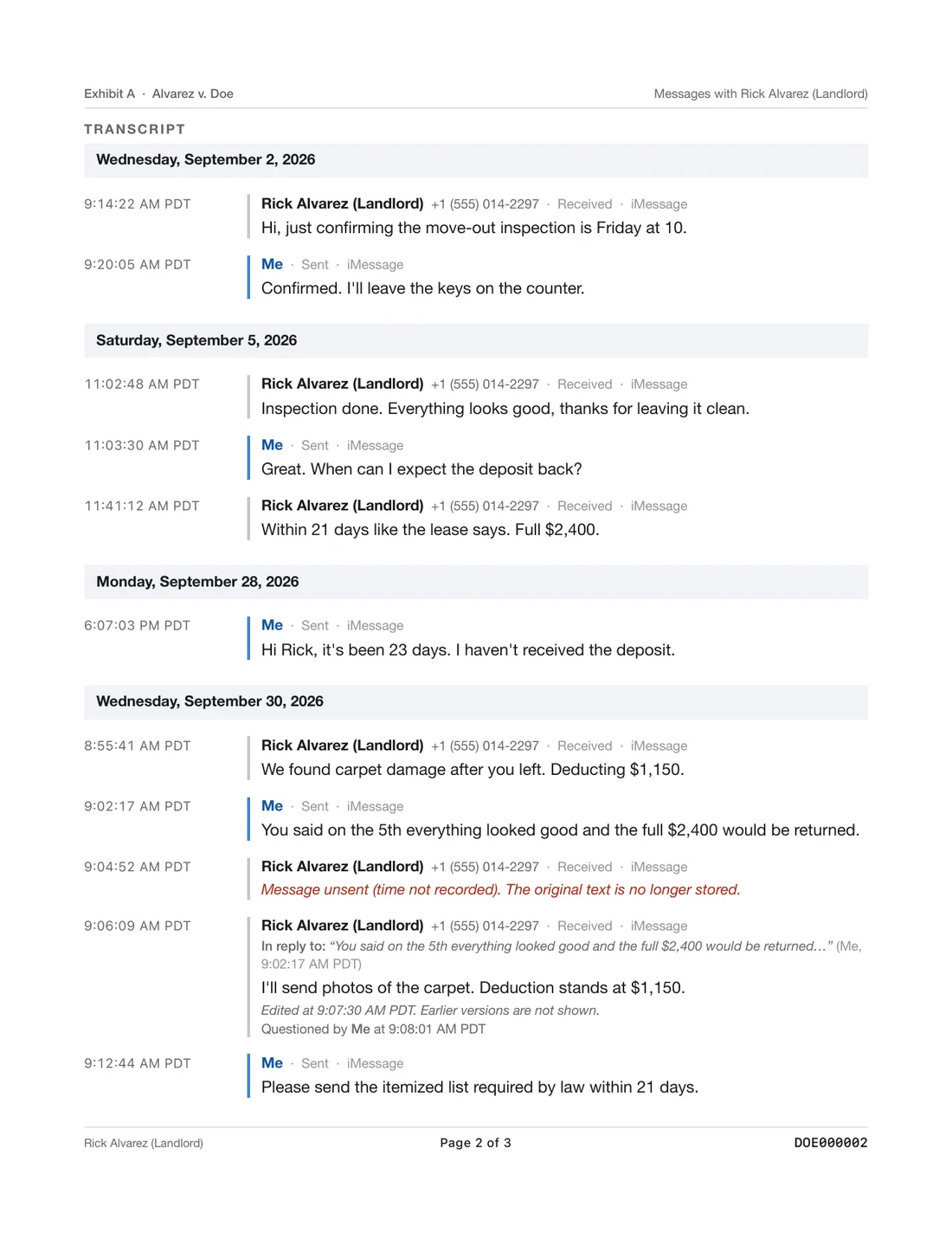
Yes, text messages can be used in an Arizona divorce or custody (legal decision-making and parenting time) case, but under Rule 49 of the Arizona Rules of Family Law Procedure you generally must disclose them to the other side before you use them at a hearing. Keep the conversation on your phone, make a complete copy with dates, times and numbers, and serve it as part of your disclosure by the deadlines in Rule 49 or the court's orders.
Which court hears it
Family law cases in Arizona are filed in the superior court of the county where one of the spouses lives. The Arizona Judicial Branch's family law page says at least one spouse must have lived in Arizona for 90 days, and if a minor child is involved, the child must have lived in Arizona for 6 months before filing. The superior court's jurisdiction includes dissolution and annulment of marriages.
Arizona's family rules use the terms "legal decision-making" and "parenting time" for what many people call custody and visitation. The court's self-service center has family law forms, instructions and booklets, and links to county self-service centers such as Coconino and Pima.
Rule 49: you must disclose what you plan to use
Rule 49 of the Arizona Rules of Family Law Procedure is about disclosure. A few parts matter directly for text messages:
- Disclosure of exhibits: a party must disclose evidence, documents or electronically stored information they plan to use at a hearing, including material to be used for impeachment. Texts you plan to show the judge fall here.
- Timing: unless the parties agree in writing or the court orders otherwise, initial disclosures are due no later than 40 days after the first responsive pleading. New information must be disclosed within 30 days of finding it, and reasonably in advance if a hearing is less than 30 days away.
- Form of electronically stored information: unless agreed or ordered otherwise, you produce it in the form the other side asks for. If they do not ask, you can use the native form or another reasonably usable form that lets them access, search and display it, including metadata.
- Not filed: these disclosures are served on the other party, not filed with the court.
- Legal decision-making cases: the initial disclosure must include copies of past or current protective orders and their petitions involving a party or household member.
What that means for your copy
Because the other side can ask for electronically stored information in a usable form, a stack of cropped screenshots may not be enough. A PDF that shows every message with its date, time and sender, plus a spreadsheet version, is closer to what Rule 49 describes. Ask your lawyer what form to produce, especially if the other side has asked for a specific one.
- Free: screenshots (swipe left to show times), or on a Mac with Messages in iCloud, File > Print in the Messages app.
- Free: back up the iPhone in Finder (General > Back Up Now) so the messages are preserved while the case runs.
- TextExhibit: exports one conversation or a date range to PDF, CSV and HTML at the same time, with sender numbers, times to the second, photos, and a manifest of SHA-256 hashes. Optional Bates numbers and an exhibit label help when both sides need to refer to pages. Free with a watermark; $24.99 once removes it.
Filing papers: eFileAZ
The Arizona Judicial Branch says the superior court offers electronic filing through eFileAZ, and its county chart lists family cases as open to eFiling in many counties. Check the chart for yours. Because Rule 49 disclosures are served, not filed, you usually do not file your texts at all unless the court asks for them. Check your county's rules and the judge's orders for how exhibits are handled at trial.
What to keep in mind
- This is general information, not legal advice. Deadlines and formats can change by court order. Talk to a family lawyer or your county's self-service center.
- Rule 49 says it does not apply to proceedings addressed by Rules 91 through 92. Check with a lawyer which rules cover your proceeding.
- TextExhibit exports what is on the phone or in the backup. It does not produce the original database files a forensic examiner might ask for.
Questions
Can I surprise my spouse with texts at the hearing?
Rule 49 says you must disclose evidence you plan to use at a hearing, including impeachment material. Material not disclosed on time can lead to the remedies in Rule 65. Ask your lawyer before holding anything back.
Do I file the texts with the clerk?
Generally no. Rule 49 says disclosures are served on the other parties and may not be filed with the court. Exhibits for trial follow the judge's orders and local practice.
What if my spouse wants the messages in a particular format?
Under Rule 49, electronically stored information is produced in the form the receiving party requests, unless the parties agree or the court orders otherwise. Disputes go to the court by motion.
Should I include texts with my children?
Think carefully and ask a lawyer. Disclose only what is relevant, and remember the other side will read everything you hand over.
Sources
- Arizona Rules of Family Law Procedure, Rule 49 Disclosure, Arizona Court Rules (official site) (checked November 15, 2026)
- Child Support and Family Law, Arizona Judicial Branch Self-Service Center (checked November 15, 2026)
- Superior Court, Arizona Judicial Branch (checked November 15, 2026)
- Superior Court eFiling Availability, Arizona Judicial Branch (checked November 15, 2026)
Export the whole conversation
TextExhibit turns a conversation into one PDF with exact times, names and numbers, photos in place and page numbers, on your Mac. Free to preview; $24.99 once to export.